
February
Written by Pages Editorial.
Where January tends to bring newness, hope. February is settling. The frisson of January is soaking into the skin as we move into midseason charm. The point where the weather is no longer novel and you begin to yearn for winter coats or summer lace, depending on where you are plopped within the world. We hope these notable releases in February carry you through to an anticipated seasonal shift come March.
As always to share your literary or cultural opinions, email hello@pagesstudio.net
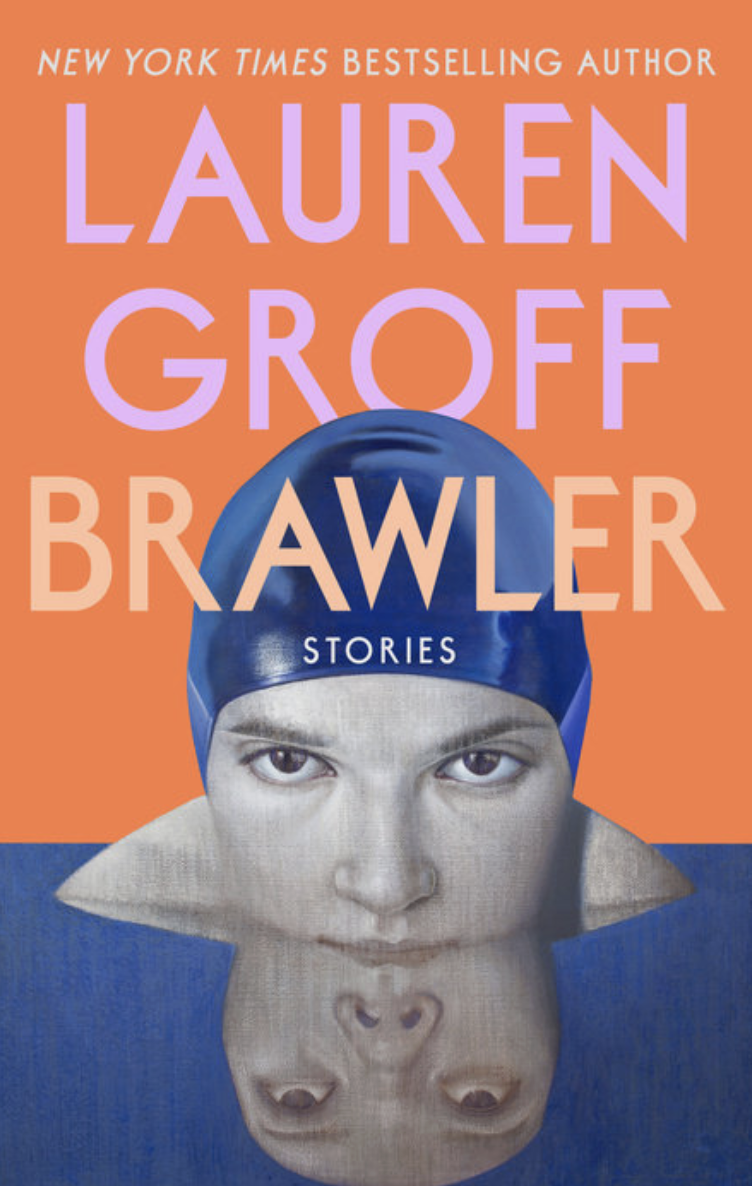
Brawler: Stories By Lauren Groff
“A stunning, fierce collection from a master of the short story and one of the most important writers of our time
Read alone, each story in Lauren Groff’s electric collection is an individual triumph, bold, agile, and packed with power. Read together, they hum in exhilarating resonance. Ranging from the 1950s to the present day and moving across age, class, and region — from New England to Florida to California — these nine stories reflect and expand upon a shared theme: the ceaseless battle between humans’ dark and light angels.
“In every human there is both an animal and a god wrestling unto death,“ one character tells us. Among those we see caught in this match are a young woman suddenly responsible for her disabled sibling, a hot-tempered high school swimmer in need of an adult, a mother blinded by the loss of her family, and a banking scion endowed with a different kind of inheritance. Motivated by love, impeded by the double edges of other peoples’ good intentions, they try to do the right thing for as long as they can.
Precise, surprising, and provocative, anchored by profound insight into human nature, Brawler reveals the repeated, sometimes heartbreaking turning points between love and fear, compassion and violence, reason and instinct, altruism and what it takes to survive.
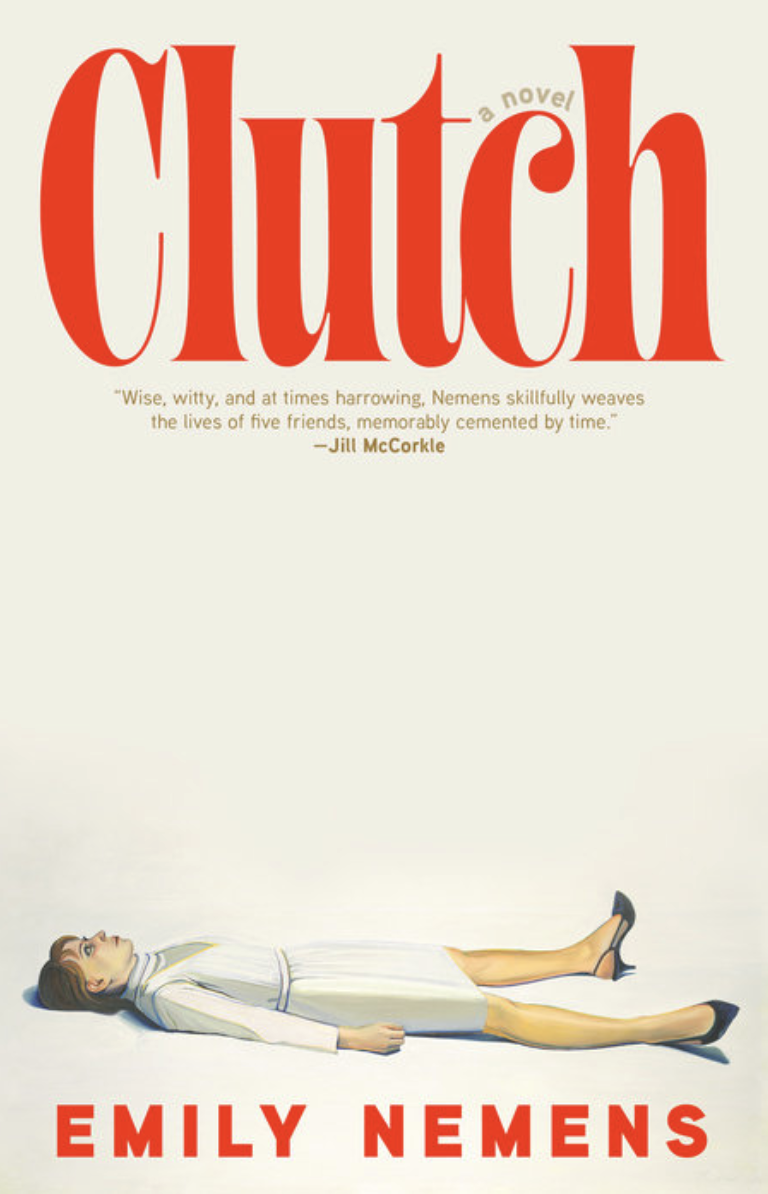
As undergrads, Gregg, Reba, Hillary, Bella, and Carson formed the kind of rare bond that college brochures promise—friendship that lasts a lifetime. Two decades later, the women are spread across the country but remain firmly tethered through their ever-unfurling group chat. They’ve made it through COVID and childbirth and midcareer challenges, but no one can anticipate what’s coming down the pike.
The five women converge on Palm Springs for a long overdue reunion: Gregg, who has forged a path as a progressive Texas legislator, is facing a huge decision about her political future. Reba, who moved back to the Bay Area after decades away, is deep in IVF treatments while caring for her aging parents and navigating a San Francisco she hardly recognizes. Hillary’s medical career in Chicago is going great—but at home, her husband’s struggles with addiction have derailed their life. In New York City, Bella faces the biggest case in her career as a litigator while her home life crumbles around her, and across the river in Brooklyn, Carson is working on a new novel as well as forging a possible relationship with the father she’s never met.
Twenty years into their shared friendship, the stakes are higher than ever, and they must help one another reconcile professional ambition with personal tumult. Clutch is a big, beautiful, and deeply absorbing novel that asks how much space and heart we can give to our friends and our families, and what space we can save for ourselves.
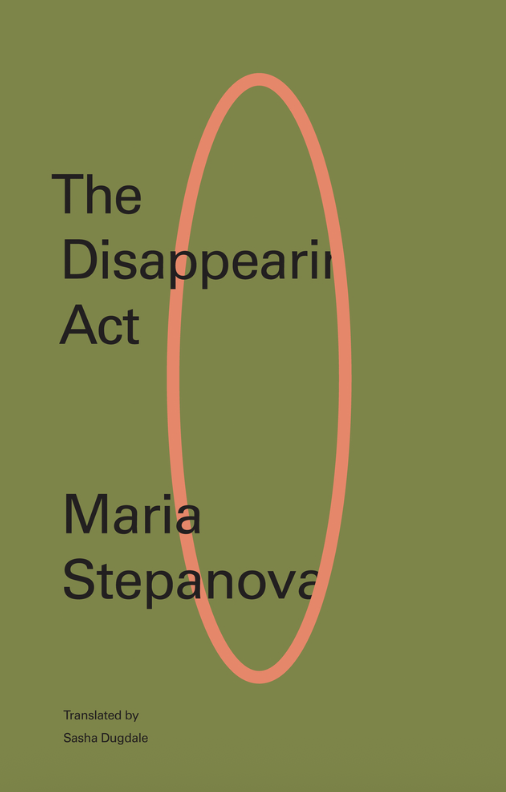
The Disappearing Act by Maria Stepanova
The writer M has lived in the city of B ever since her homeland declared war on a neighboring state. Exiled, she is unable to write there and suffers from loneliness, shame, and despair, but then M is invited to give a reading at a literary festival in a nearby country. After a series of missed connections and mishaps, including losing her phone, she finds herself all alone in the wrong coastal town, befriending a local man and attending the circus...
In this brief interlude, severed from reality, it seems as if M may finally escape from herself, from her past, from her nationality. She could start all over from scratch and join the circus. Written in Maria Stepanova's rich and hypnotic prose, The Disappearing Act oscillates between reality and dream, between an oppressive present and a lost past, between life and literature.
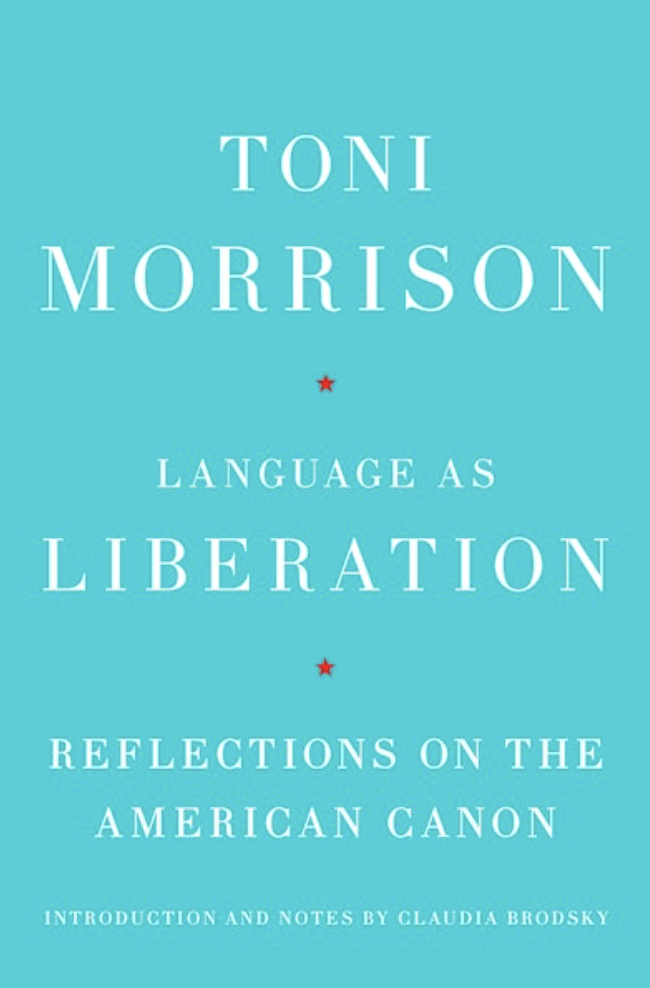
Language as Liberation: Reflections on the American Canon by Toni Morrison
Nobel laureate and Pulitzer Prize–winning author of Beloved Toni Morrison investigates Black characters in the American literary canon and the way they shaped the nation’s collective unconscious.
In a dazzling series of lectures from her tenure as a professor at Princeton University, Toni Morrison interrogates America’s most famous works and authors, drawing a direct line from the Black bodies that built the nation to the Black characters that many of the country’s canonical white writers imagined in their work. Morrison sees these fictions as a form of creation and projection, arguing that they helped manufacture American racialidentity—these “Africanist” presences are “the shadow that makes light possible,” as Morrison writes, and the reflections of their authors’ own deepest fears, insecurities, and longings.
With profound erudition and wit, Morrison breaks wide open the American conception of race with energetic, enlivening readings of the nation’s canon, revealing that our liberation from these diminishing notions comes through language. “How,” Morrison wonders, “could one speak of profit, of economy, of labor, or progress, of suffragism, or Christianity, of the frontier, of the formation of new states, the acquisition of new lands . . . of practically anything a new nation concerns itself with—without having as a referent, at the heart of the discourse or defining its edges, the presence of Africans and/or their descendants?”
To read these lectures, collected here for the first time, is to encounter Morrison, not just the writer but also the teacher, in the most penetrating and subversive way yet. With a foreword by her son Ford Morrison and an introduction by her Princeton comparative literature colleague Claudia Brodsky, Language as Liberation is a revelatory collection that promises to redefine the American canon.
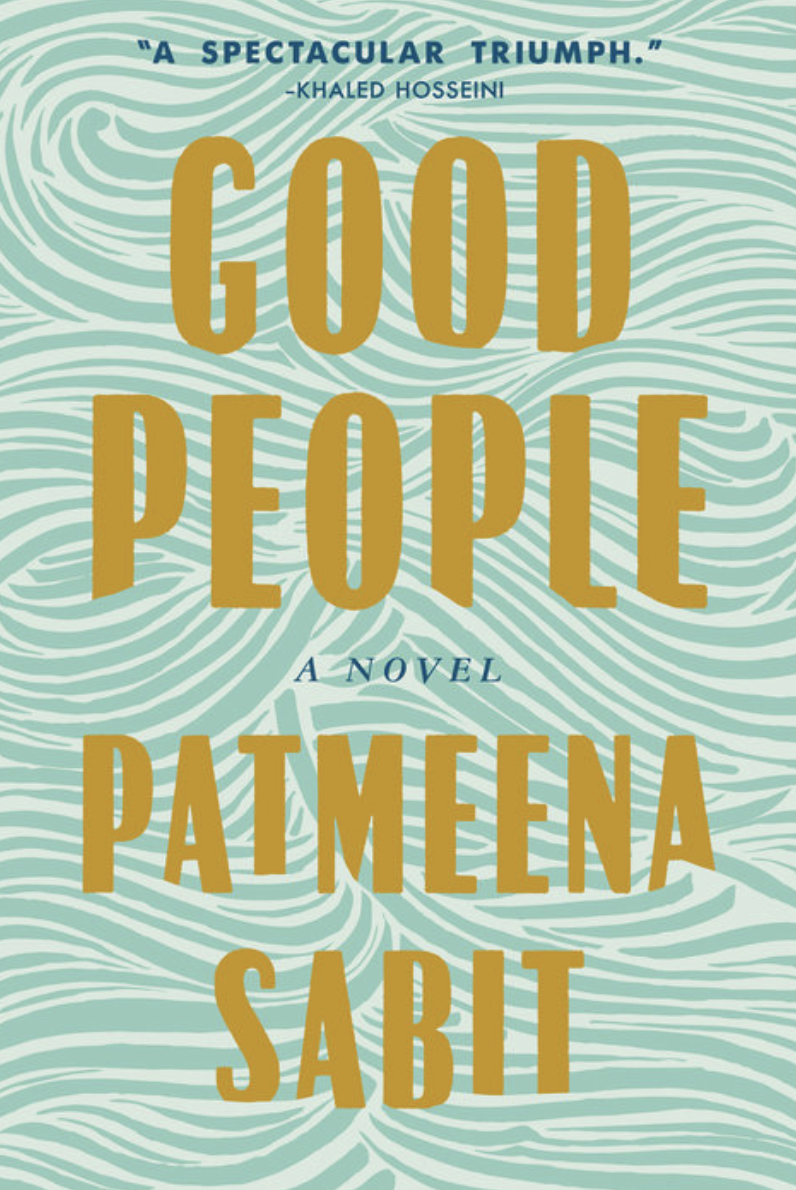
Good People: A Novel by Patmeena Sabit
The Sharaf family is the picture of success. Prosperous, rich, happy. They came to this country as refugees with nothing more than the clothes on their backs. And now, after years of hard work, they live in the most exclusive neighborhood, their growing family attending the most prestigious schools. Zorah, the eldest daughter, is the apple of her father’s eye.
When an unthinkable tragedy strikes, everyone is left reeling and the family is thrust into the court of public opinion. There is talk that behind closed doors the Sharafs’ happy household was anything but. Did the Sharaf family achieve the American dream? Or was the image of the model immigrant family just a façade?
Like a literary game of ping-pong, Good People compels the reader to reconsider what might have happened even on the previous page. Told through a kaleidoscope of perspectives, it is a riveting, provocative, and haunting story of family—sisters, brothers, mothers, fathers, and the communities that claim us as family in difficult times.

From the Marginalian creator and bestselling author Maria Popova, a bold exploration of what makes a meaningful life.
What is life?
What is death?
What makes a body a person?
What makes a planet a world?
In Traversal, Maria Popova illuminates our various instruments of reckoning with the bewilderment of being alive—our telescopes and our treatises, our postulates and our poems—through the intertwined lives, loves, and legacies of visionaries both celebrated and sidelined by history, people born into the margins of their time and place who lived to write the future: Mary Shelley, Walt Whitman, Frederick Douglass, Fanny Wright, Dorothy Crowfoot Hodgkin, Marie Tharp, Alfred Wegener, Humphry Davy, Ruth Benedict, and Margaret Mead. Woven throughout their stories are other threads—the first global scientific collaboration, the Irish potato famine, the decoding of the insulin molecule, the invention of the bicycle, how nature creates blue—to make the tapestry of meaning more elaborate yet clearer as the book advances, converging on the ultimate question of what makes life alive and worth living.
By turns epic and intimate—as concerned with the physical laws binding atoms into molecules as with the psychic forces binding us to one other—Traversal explores the universe between cells and souls to reveal the world, and our lives, in a dazzling new light.
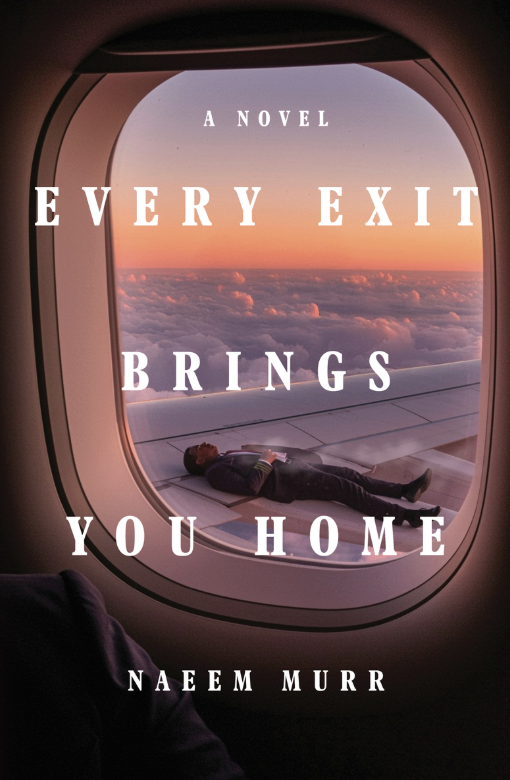
Every Exit Brings You Home by Naeem Murr
As a financial crisis looms, Jamal "Jack" Shaban is trying to save his neighbors from bankruptcy. But who is Jack, really? For his flight attendant colleagues, he's an object of desire, even love, particularly for his sweetly bawdy Wisconsinite best friend, Birdy. Birdy knows nothing about Dimra, Jack's traditional Muslim wife, with whom Jack is desperate to have a child. Nor does Dimra know about Jack's attraction to Marcia: an angry single mom new to the building. The resulting tangle of love, desire, and conflict returns Jack to the violence of 1980s Gaza, where a taboo affair nearly destroyed his life.
A man of many sides--adulterer, devoted husband, fixer, community leader, liar, and the survivor of human and cosmic cruelty in both the past and the novel's present--Jack is a paragon of both desire and hope, someone who has committed to love because the alternative is utter darkness.
CONTRIBUTE
hello@pagesstudio.net
All over the show.