
Books publishing in June, 2026.
Written by Pages Editorial.
Better late than never, I say to myself as I write up this little list. Adorably, we’ve seen your messages asking for our June list. Heartwarming truly, well here it is. Books publishing this month include Maggie O’Farrell, bestselling author of Hamnet & The Marriage Story releases a soaring historical novel and Deborah Levy’s new dalliances. Enjoy!
To share your literary or cultural opinions, email hello@pagesstudio.net
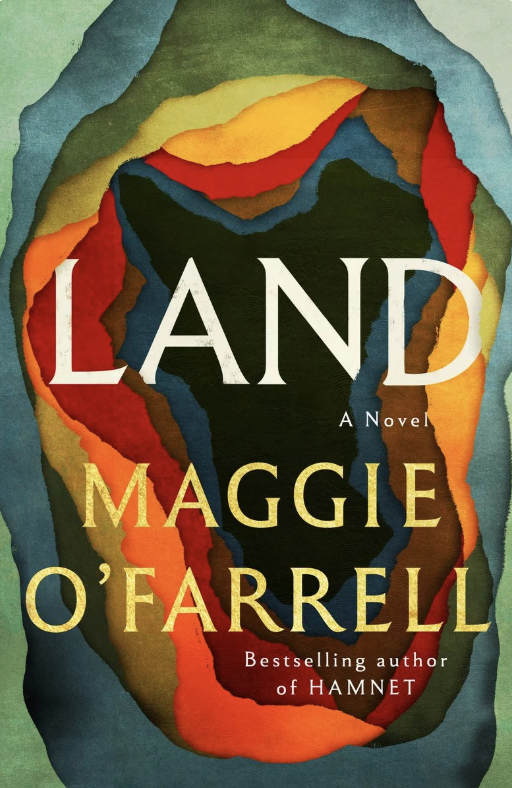
On a windswept peninsula stretching out into the Atlantic, Tomás and his reluctant son, Liam, are working for the great Ordnance Survey project to map the whole of Ireland. The year is 1865, and in a country not long since ravaged and emptied by the Great Hunger, the task is not an easy one. Tomás, however, is determined that his maps will be a record of the disaster.
The British soldiers in charge are due to arrive any day, expecting the work to be completed, but Tomás is unexpectedly sent off course by an unsettling encounter in a copse. His life, and the lives of those of his family, will never be the same again. Liam is terrified by the sudden change in his taciturn father. What was it that caused such cracks to open in Tomás, and how is Liam, aged only ten, going to finish the mapping and get them both home?
Land is a novel about separation and reunion, tragedy and recovery, colonization and rebellion. It is a story of buried treasure, overlapping lives, ancient woodland, persistent ghosts, a particularly loyal dog, and how, when it comes to both land and history, nothing ever goes away. As spellbinding and varied as the landscape that inspired it, Land is, above all, a story of survival, for our times and for all time.
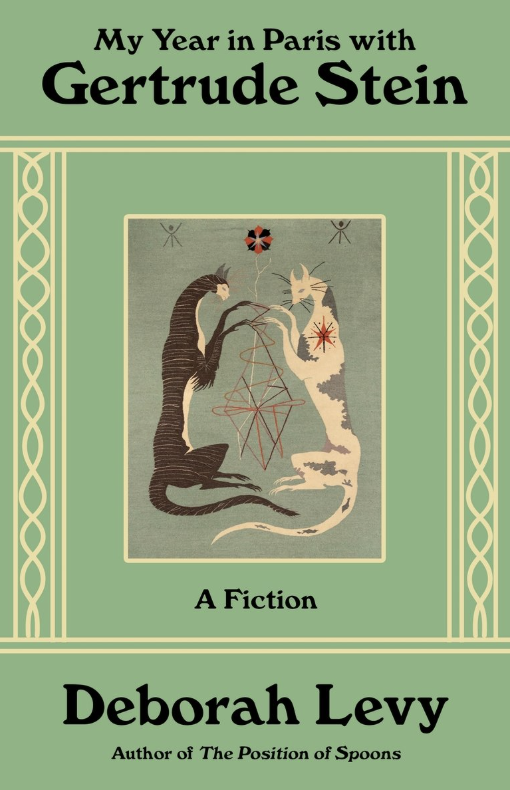
My Year in Paris with Gertrude Stein
Our narrator has a lot going on. Her friend Eva’s cat is missing—also, she wonders, where is Eva’s husband. Their other friend Fanny is barely around, and not because of her job in finance; she is tangled up with no less than three lovers. And Gertrude Stein is ruining the narrator’s life.
She is trying to write an essay about Stein but it seems impossible. She knows too much and nothing at all about the leading avant-garde thinker of the early twentieth century. There are the facts: Gertrude Stein studied psychology at Harvard and medicine at Johns Hopkins, then quit; curated modern art in her rented apartment that would shake the world; wrote novels, plays, poetry, and libretti that are incoherent and brilliant; felt love at first sight for her daring wife, the subject of The Autobiography of Alice B. Toklas.
But so much is out of reach. How do we put ourselves together? What do we lose to become modern? What do we find beyond the limits of language? Only a book like this, only a book by Deborah Levy, “an indelible writer [and] elliptical genius” (Dwight Garner, The New York Times Book Review), could attempt such an investigation. It crashes through genre to form something distinctively, utterly new—an imaginative, entertaining, and scholarly manifestation befitting the genius at its center. This is My Year in Paris with Gertrude Stein.
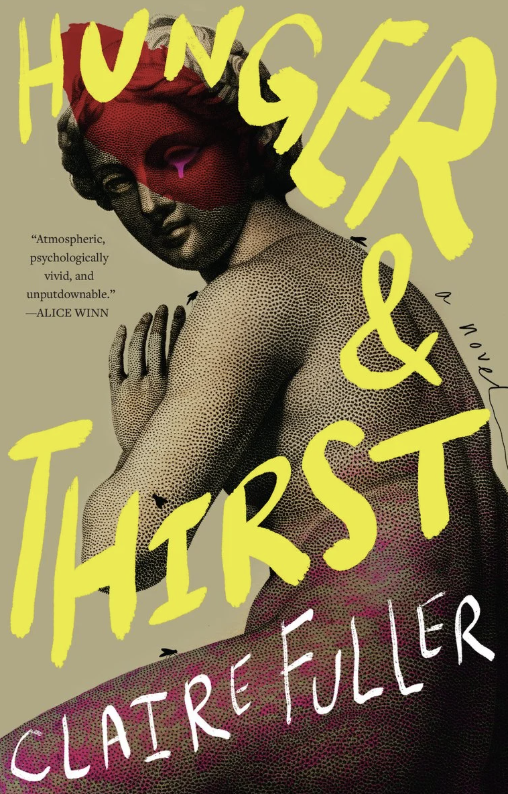
Hunger and Thirst by Claire Fuller
1987: After a childhood trauma and years in and out of the care system, sixteen-year-old Ursula finds herself with a new job delivering mail at a local art school, a bed in a halfway house, and some new friends, including wild-child Sue. When Ursula is invited to join a squat at the Underwood, a mysterious house whose owners met a terrible end, she can’t resist this hodgepodge family. But as Sue’s behavior and demands become more extreme, Ursula, who has always been hungry—for food, but more importantly for love and acceptance—carries out her friend’s terrible dare. And, for this, Ursula finds herself literally haunted.
Thirty-six years later, Ursula is a renowned but reclusive sculptor living under a pseudonym in London when her identity is exposed by a true-crime documentarian researching an unsolved disappearance. But the filmmaker is not the only one who has discovered Ursula’s whereabouts, and as her past catches up with her present, Ursula must work out whether the monsters are within her or without—and if they will finally make her pay for her past mistakes.
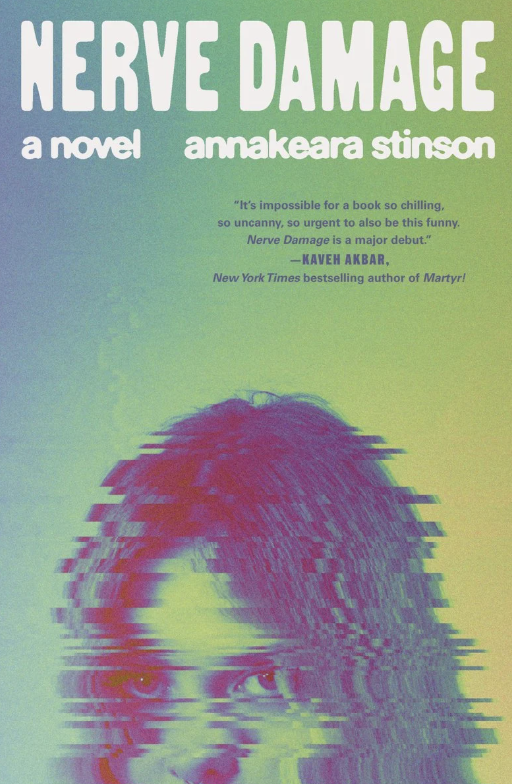
Nerve Damage by Annakeara Stinson
Clarice’s breakup with P.T. began the usual way—she discovered he was cheating. Then came the constant texts, the nonstop emails from burner accounts, countless phone calls from dozens of different numbers. He showed up outside her apartment and her office. He sent her flowers and poems, and, perhaps most sinister of all, a link to the music video for Dido's “White Flag.” Relief arrived only when Clarice finally obtained a restraining order and one-way ticket from New York to L.A.
Just as the restraining order expires—and three years to the day since she left him—Clarice spots a man who looks suspiciously like P.T. at a nightclub. Could it be him? Her best friend thinks she’s imagining things. Her therapist wants her to focus on healing her inner child. Her mother is busy planning her wedding to her fourth husband. A psychic medium can reveal only that P.T.’s energy is too volatile to locate on the spiritual plane. As painful memories resurface, Clarice is convinced her ex has returned to ruin her life. But with scant evidence to prove it, she takes increasingly unhinged steps to uncover the truth, ultimately leading to a place where paranoia and reality begin to blur.
A profane and poignant debut novel, Nerve Damage is a different kind of survivor narrative, about how far one woman will go to wrest back control of her life in a world determined to send her spiraling.
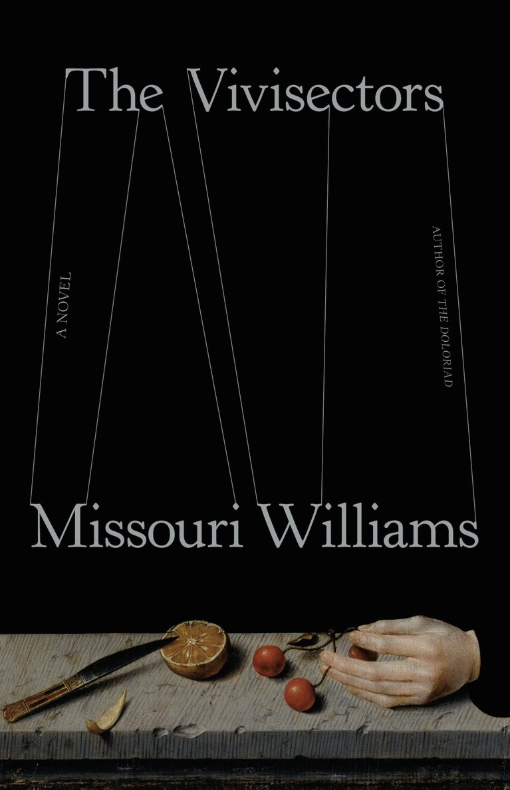
The Vivisectors by Missouri Williams
In a famed but crumbling university city overrun by nature, where power is held in a fragile balance between academics and a contingent of rogue gardeners, the reclusive narrator of The Vivisectors spends her days propping up the career of her needy and fraudulent professor boss. Then a controversy ruptures her careful routine: Adam, a contrarian student and an obsession of the boss, comes into heated conflict with a young professor, with both men claiming discrimination. The crisis subsumes the university, though the narrator is unmoved—not even the attempted suicide of her estranged mother has been enough to dispel her lack of engagement with the world. But when her boss commands her to befriend Adam, the narrator finds herself both caught up in the events threatening to tear the city apart and increasingly drawn to the alluring student at the heart of it all.
Coursing with icy suspense and told with violent precision, The Vivisectors is a new kind of love story for an age of deteriorated communication. With the unsparing style and intellectual ambition that made her award-winning debut The Doloriad a celebrated provocation, Missouri Williams holds a mirror up to humanity’s most intimate contradictions and reflects them back through a novel of profound, spiky spiritual reckoning.
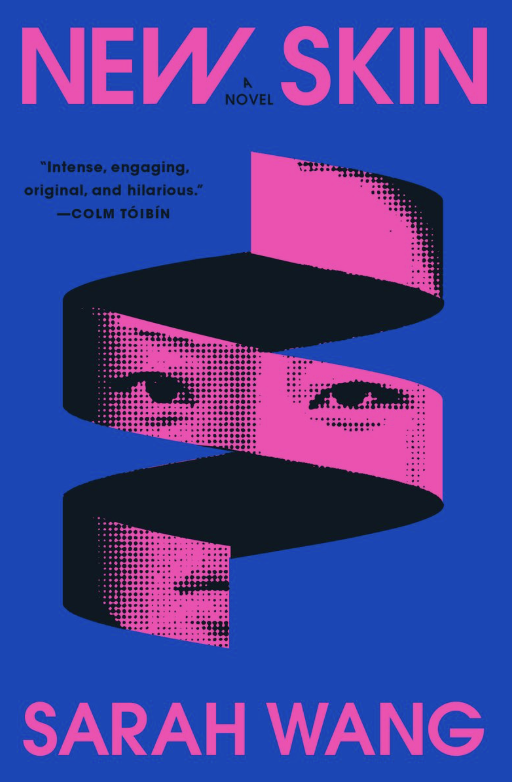
New Skin by Sarah Wang
At twenty-six, Linli Feng is still trying to escape her mother Fanny's orbit. But after three years of estrangement, just when Linli has been accepted into a prestigious graduate program, she is dragged back by Fanny's latest medical catastrophe and forced to return home.
For decades, Fanny has been addicted to plastic surgery, getting bargain procedures in the basements of LA's bootleg beauty industry. Now Fanny's disfigured face is in dangerous revolt, infected and collapsing yet again from black-market injectables.
But even as Linli wades through the wreck of family finances and juggles her mother's medical care, Fanny has another secret in store. Fanny has won a spot on America's Beauty Extreme, a reality television competition in which botched plastic surgery addicts compete for reconstructive surgery as riveted audiences tune in. When Linli attempts to rescue Fanny from the sinister subculture that has already claimed her mother's face, she must at last confront the corrosive reality of the American Dream that is at the fraught heart of their relationship.
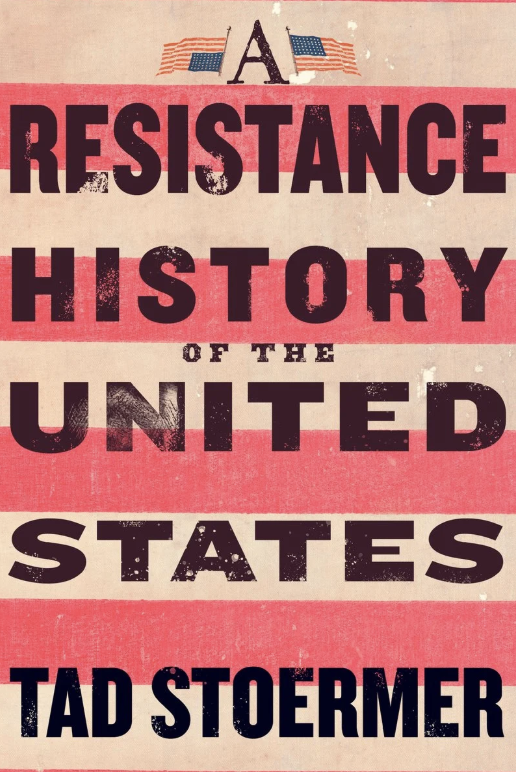
A Resistance: History of the United States by Tad Stoermer
The United States was shaped by resistance—but not in the way we’ve been taught. The Revolution did not secure liberty; it opened the door to either liberty or oppression, where only white men enjoyed all of the benefits and protections of citizenship.
In A Resistance History of the United States, public historian Tad Stoermer shows how from the very beginning, that tension—between the ideals of resistance and the realities of power—has defined America more than the Enlightenment ideals enshrined in the Declaration of Independence and the Constitution.
Utililizing powerful storytelling to focus on key—and often lesser-known—moments in American history, this book reveals the truth of how resistance movements from Colonial times have opposed the powers that be. Stoermer covers an impressive roster of pivotal movements, with each chapter identifying a key resistance movement and principle meant to inspire contemporary readers, including:
Bacon’s Rebellion/Metacomet’s War (1676)
Salem Witch Trials (1692)
The Black Loyalists (1783)
The Underground Railroad (1850)
Through these and many more examples, Stoermer dismantles the mythologies that pass for American history—exposing the curated nostalgia, moral evasions, and institutional silences that have long protected abusive power. What emerges is an essential look at how we can take lessons from the past to understand, and effectively respond to, the injustices we face today.
CONTRIBUTE
hello@pagesstudio.net
All over the show.