


A column.
Written by Pages Editorial.
For a while I have thought about the idea of access.
Access to culture, to connection.
When all you feel is despair, what role do the arts play? How should we interact with fashion, art, craft, writing when we are watching the worst parts of humanity at play.
Allow yourself moments of joy. These dalliances with hope. Don’t stop working towards, and fighting for a better world, but give yourself these rebellions, these flashes of brilliance in the darkness.
Your access, weekly.
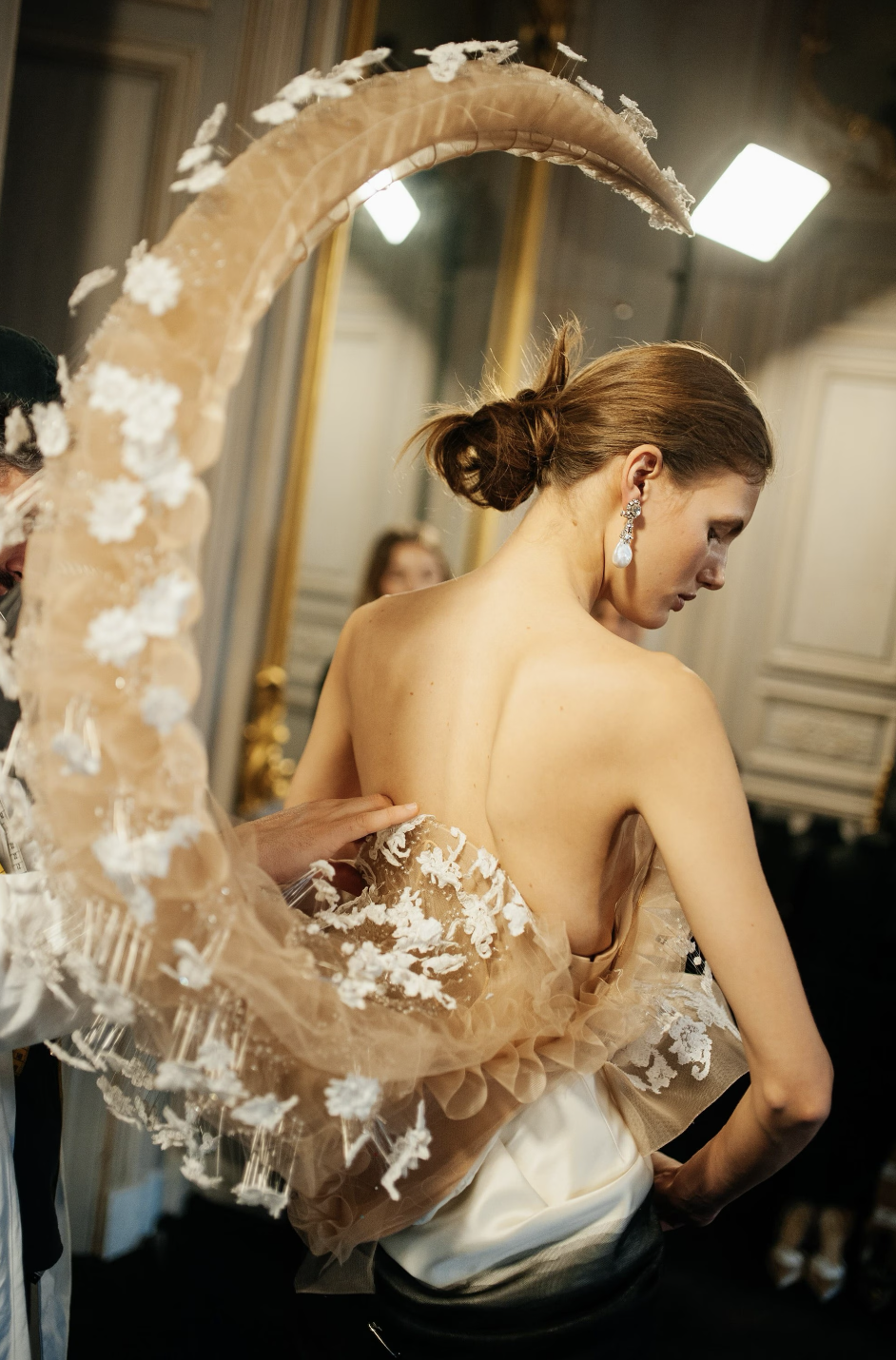
DANIEL ROSEBERRY’S SCHIAPARELLI SPRING/SUMMER 2026 HAUTE COUTURE SHOW
I cannot overstate more how much this fuelled something within. Daniel’s description of using anger within this collection felt like divine timing. In a world of collective unrest, watching anger distilled into precision, beauty, and resolve felt quietly affirming. A reminder that art doesn’t neutralize fury, it gives it form.
Roseberry is closest to Elsa Schiaparelli here in attitude rather than reference. Schiaparelli understood that elegance could be confrontational, that fashion could unsettle as much as it seduced. Her work was never about harmony, but about tension between beauty and shock, wit and violence. There is something defensive and instinctual in the work, like a body responding to threat. It expands. It exaggerates. It refuses to shrink. Blowfish-like. Self-preservation through visibility. Taking up space as a strategy.


THIS COLUMN FICTION/NON FICTION BY ALISSA BENNETT,found on Texte Zur Kunst.
When Alissa Bennett told us that, for the next edition of her column Fiction/Nonfiction, she would write about the relationship between celebrity death, mass-market merchandising, and the Werther Effect, we didn’t expect her to explore a scopophilic obsession she fostered with a friend a few years back. But in the end, everything is interwoven, even with the pea-colored mohair fibers of Kurt Cobain’s famous cardigan, which was auctioned for $334,000 some time ago. The scientific validity of the Werther effect, which goes back to the numerous copycat suicides that followed the publication of Johann Wolfgang Goethe’s classic novel “The Sorrows of Young Werther” (1774), is controversial: Can heroes with suicidal tendencies, or by extension, the fan items worshipped in their memory, potentially turn daily troubles into deadly tragedies? In any case, the objects of our columnist’s online obsession remind us that many roads lead to Wahlheim (young Werther’s fictional hometown). Last but not least, they enter into an eerie correspondence with the prematurely deceased celebrities from Bennett’s iconic “Dead Is Better” zines.
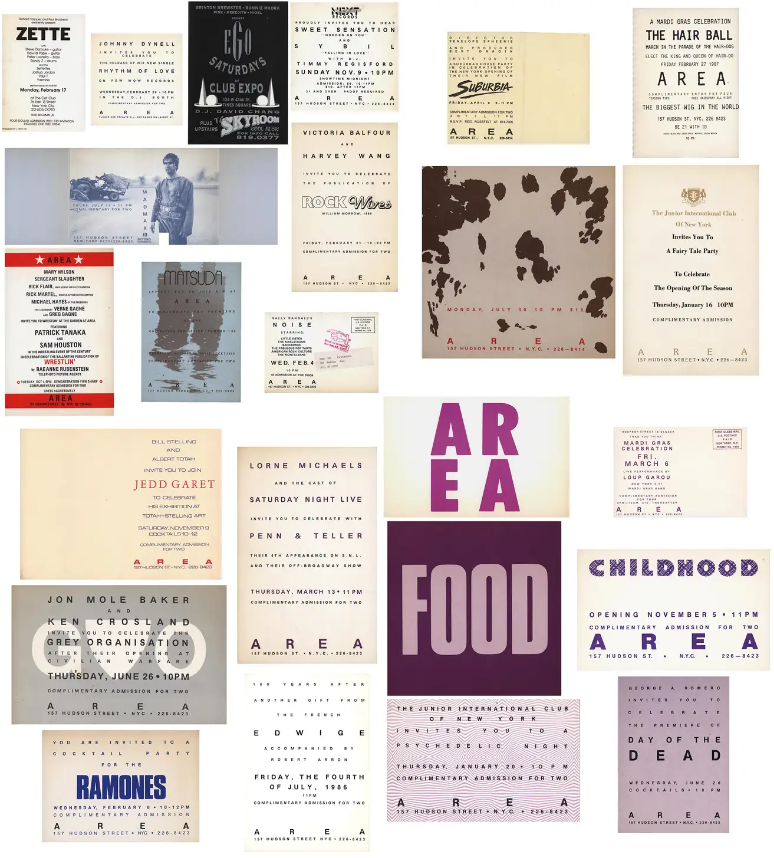
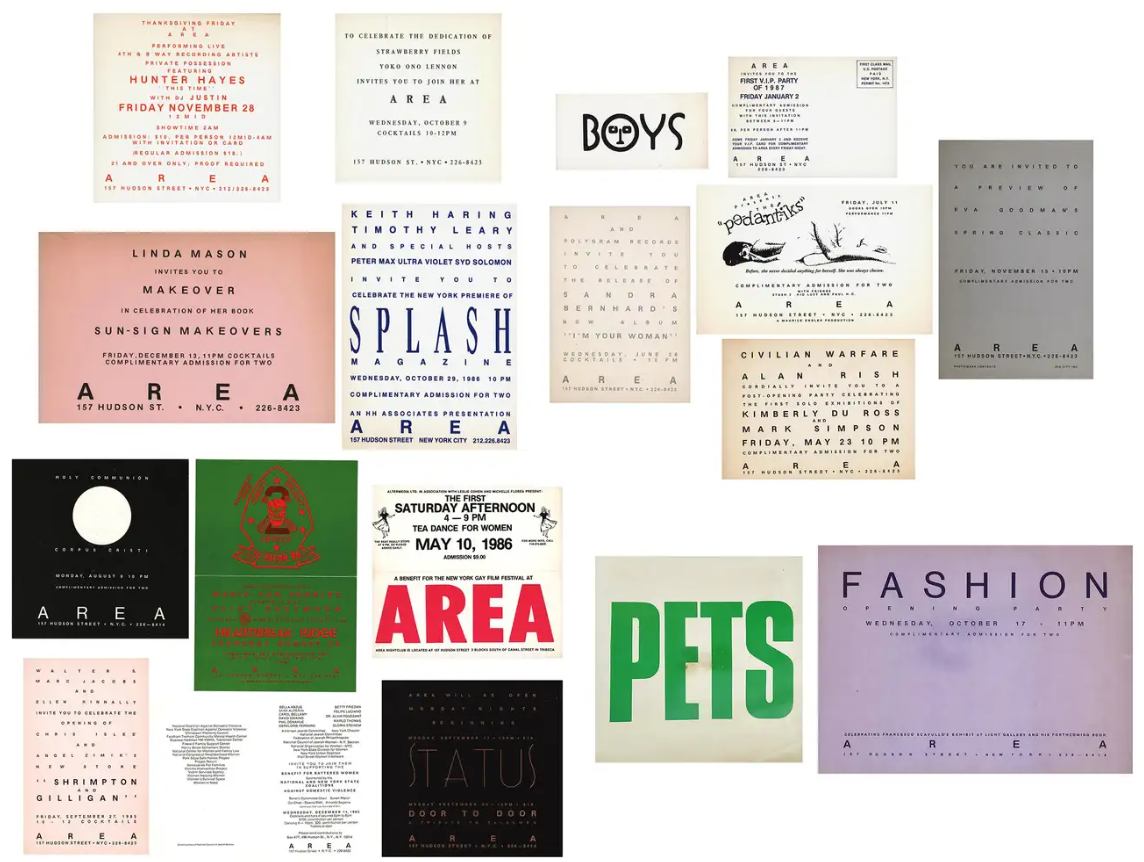
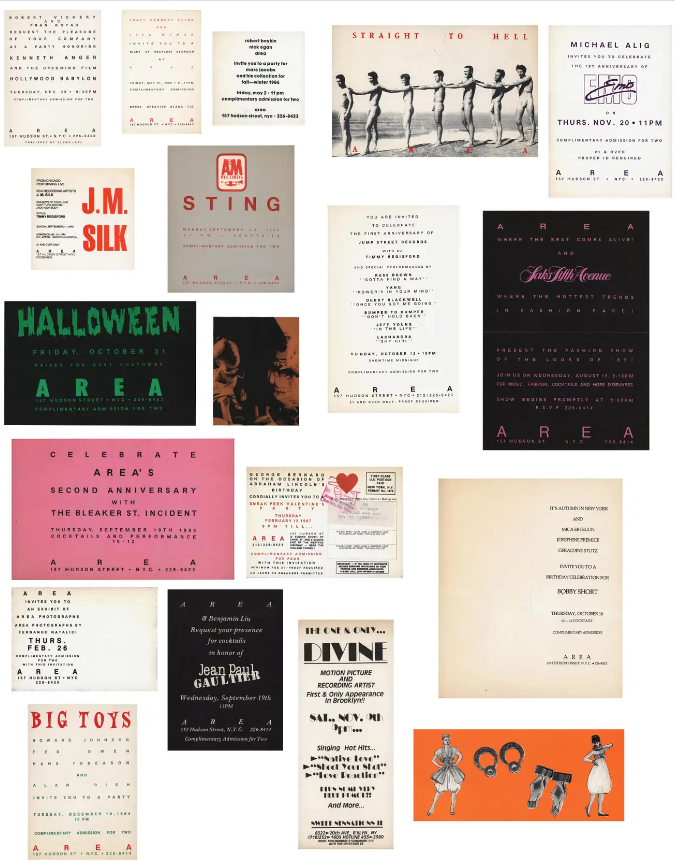
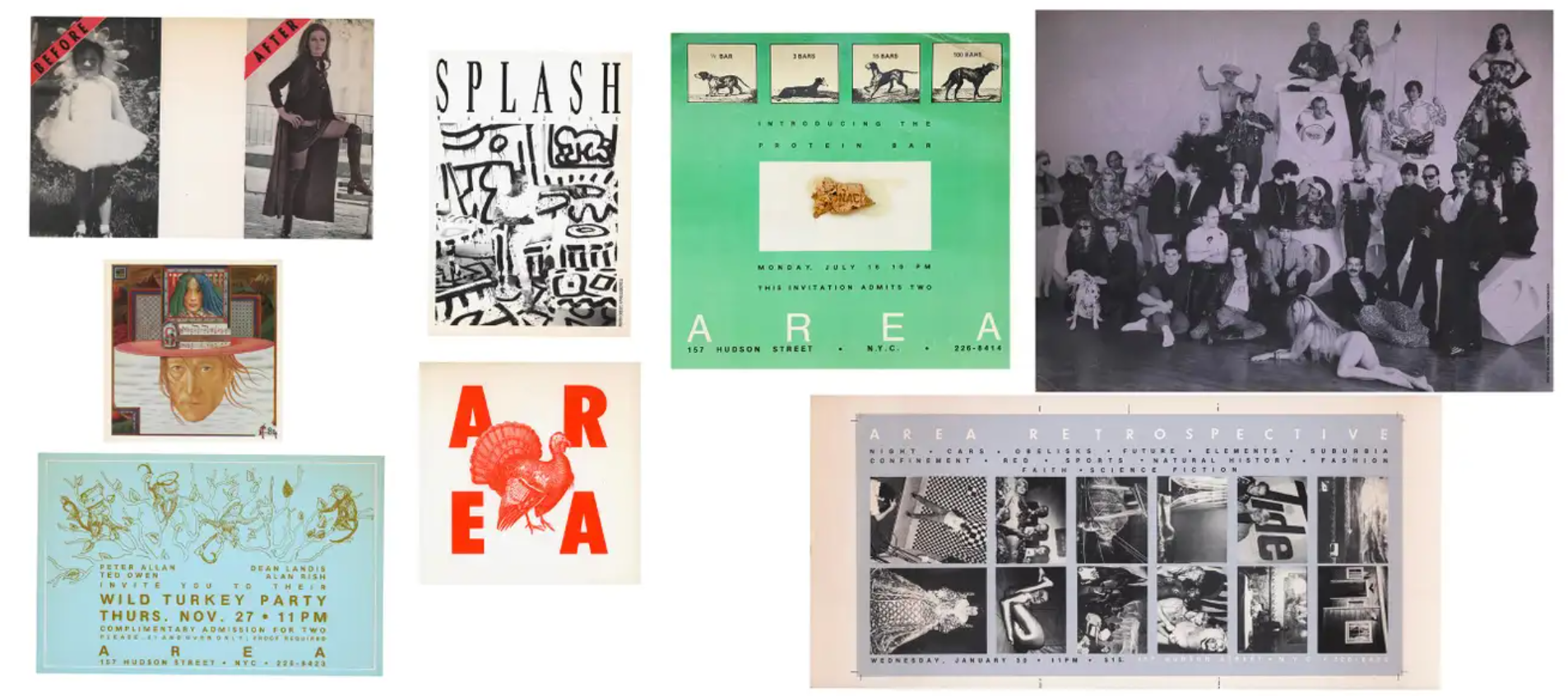
Area opened in 1983 at 157 Hudson Street, occupying a 13,000-square-foot warehouse in Tribeca. Over its short lifespan, the club became central to New York’s downtown cultural scene, drawing artists, musicians, designers, and figures such as Andy Warhol, Jean-Michel Basquiat, Francesco Clemente, Julian Schnabel, Madonna, and JFK Jr.
The club operated on a cycle of constant reinvention. Approximately every six weeks, the interior was dismantled and rebuilt around a new theme. These environments, Suburbia, Natural History, Science Fiction, Confinement, were conceived as total installations, with architecture, lighting, performance, and sound treated as a single system. Each version existed briefly before being replaced.
That same thinking shaped how the club presented itself. Invitations were produced as physical objects rather than printed cards: gelatin capsules dissolved in water, velvet boxes, hollowed eggs, champagne crackers. These mailers functioned as both announcements and artifacts, setting the tone for what awaited inside.
Founded by Eric and Christopher Goode, Shawn Hausman, and Darius Azari, Area prioritized experimentation over longevity. Artists contributed installations, performances, and DJ sets, while the audience became embedded in the environment itself. The club’s identity was inseparable from the people who passed through it.
What continues to resonate is the scale of effort invested in something designed to be temporary. The design was excessive, the labor disproportionate, and the outcome deliberately fleeting. That commitment, focused, irrational, and unsentimental, is what we adore.

AGUA VIVA BY CLARICE LISPECTOR
Our last accessible note is Clarice Lispector’s Água Viva. Written without plot or anchor, it moves in flashes of sensation, thought, and immediacy, capturing life as it’s being lived rather than remembered. In Água Viva, language becomes quite porous, a living thing. Reading it feels like we are collectively mid breath. Lispector is a common mention among our Pages readership and this novel did not disappoint.
To sign up for access, or to contribute to pagesstudio.net, contact us hello@pagesstudio.net

La Piscine
SARTORIAL ANALYSIS BY ANASA FRASER

Coppola
SHORTLIST
CONTRIBUTE
hello@pagesstudio.net
All over the show.